


Articles
Floating and Balancing the Equine Mouth
by Larry Kimberlin, DVM, FAVD, CVPP, DAVDC
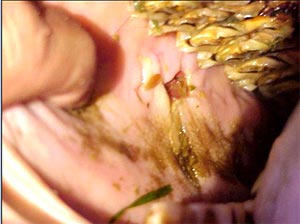
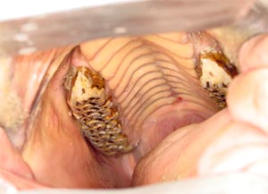
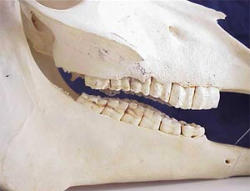
In this article we are going to talk about what it means to have your horse “floated and balanced”. The term float and balance means different things to different people. You will see these terms used in magazines in conjunction with the term equilibration. You may see them used interchangeably when they actually refer to different procedures. The true definition of the words are not as important to me (and probably you also) as why it needs to be done and what changes have occurred in my horses mouth after it has been done. The horse has teeth that are continually worn down and replaced by eruption of tooth (crown) surface into the mouth. This process continues throughout the horse’s life until there is no reserve crown left. The anatomical difference in the width of the lower jaw in comparison to the wider upper jaw causes the teeth to form sharp edges along the outer edge (called buccal) and the inside edge (called lingual) of the lower teeth. The edges or “points” can become razor sharp over time and lacerate the cheek and tongue as shown in this photo. Bacteria and virus organisms will then infect this soft tissue and cause pain and discomfort. This is similar to having a cold sore in your mouth or when you bite your lip or cheek. The term “floating” refers to the removal of these sharp points by the use of hand floats or most often carbide or diamond coated power instruments. The points are ground off and a gentle curve or radius is applied to the edge of the teeth to prevent further trauma and remove as little of the chewing or occlussal surface as possible, as shown here. The term balancing or equilibration refers to reducing uneven length of the teeth along the arcades. When the crown length of individual teeth are too short or too long it causes undue pressure in the mouth when food is chewed. There are many causes of uneven crown height – but one of the most common is the "wave”. Waves are formed when two or more teeth in an arcade are longer than the adjacent teeth. The photo at the left shows a wave. The horse that has been floated and equilibrated will chew with less effort and will be more comfortable when it takes in the hay and grain that keep the engines running. All horses need to be examined yearly and be floated and balanced to promote optimum health and performance. Dr. Kimberlin is the Co-author of Atlas of Clinical Imaging and Anatomy of the Equine Head
© Copyright © 2002- 2016 All rights reserved


Northeast Texas Veterinary Dental Center
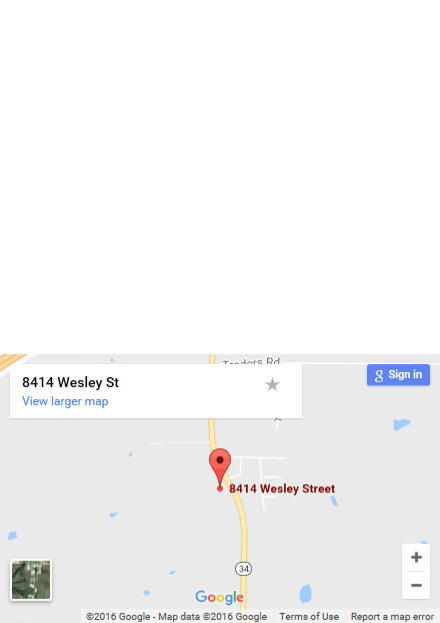
8414 Wesley Street Greenville, TX 75402 903-454-1563 info@crossroadsvetclinic.com














© Copyright © 2002- 2016 All rights reserved This page designed and
maintained by Word Works
Articles
Floating and Balancing the Equine Mouth
by Larry Kimberlin, DVM, FAVD, CVPP, DAVDC
In this article we are going to talk about what it means to have your horse “floated and balanced”. The term float and balance means different things to different people. You will see these terms used in magazines in conjunction with the term equilibration. You may see them used interchangeably when they actually refer to different procedures. The true definition of the words are not as important to me (and probably you also) as why it needs to be done and what changes have occurred in my horses mouth after it has been done. The horse has teeth that are continually worn down and replaced by eruption of tooth (crown) surface into the mouth. This process continues throughout the horse’s life until there is no reserve crown left. The anatomical difference in the width of the lower jaw in comparison to the wider upper jaw causes the teeth to form sharp edges along the outer edge (called buccal) and the inside edge (called lingual) of the lower teeth. The edges or “points” can become razor sharp over time and lacerate the cheek and tongue as shown in this photo. Bacteria and virus organisms will then infect this soft tissue and cause pain and discomfort. This is similar to having a cold sore in your mouth or when you bite your lip or cheek. The term “floating” refers to the removal of these sharp points by the use of hand floats or most often carbide or diamond coated power instruments. The points are ground off and a gentle curve or radius is applied to the edge of the teeth to prevent further trauma and remove as little of the chewing or occlussal surface as possible, as shown here. The term balancing or equilibration refers to reducing uneven length of the teeth along the arcades. When the crown length of individual teeth are too short or too long it causes undue pressure in the mouth when food is chewed. There are many causes of uneven crown height – but one of the most common is the "wave”. Waves are formed when two or more teeth in an arcade are longer than the adjacent teeth. The photo at the left shows a wave. The horse that has been floated and equilibrated will chew with less effort and will be more comfortable when it takes in the hay and grain that keep the engines running. All horses need to be examined yearly and be floated and balanced to promote optimum health and performance. Dr. Kimberlin is the Co-author of Atlas of Clinical Imaging and Anatomy of the Equine Head
Northeast Texas Veterinary
Dental Center
8414 Wesley Street Greenville, TX 75402 903.454-1563 info@crossroadsvetclinic.com Appointments: 9 a.m.– 5 p.m. Monday-Friday Open for animal drop-off at 7:30 a.m.