

Why horses need
dental care
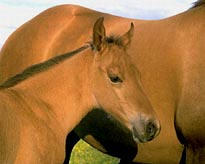
The mouth is a performance horse's "steering wheel". A horse with a balanced mouth, free of dental irritation and disease, has "power steering"! Regular dental care removes irritating points and malocclusions, safeguarding your horse's health and overall performance. It's also cost effective - a horse with a healthy mouth needs less feed to get required nutrition. Wouldn't you like your ride to have "power steering"? • Equine Dentition: The Horse’s Teeth • Performance Dentistry/Maintenance • Types of Dental ProblemsEquine Dentition: The Horse's Teeth
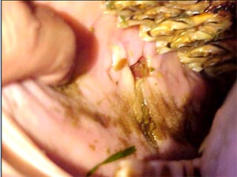
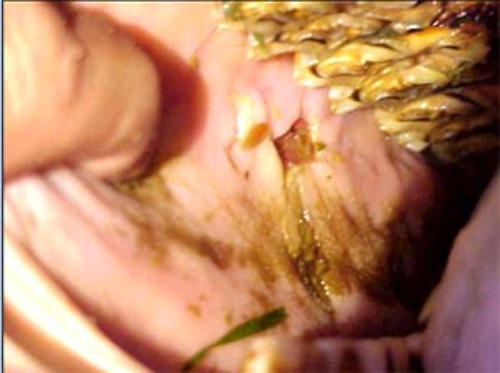
Horses have hypsodont teeth. Unlike adult human teeth, that remain the same throughout life, adult equine teeth continue to erupt and wear down until the tooth wears out (20-30 years). A horse's teeth pulverize fodder and crush grain with a side to side chewing action. This lateral motion creates sharp edges (called points) and irregular surfaces on the teeth. Points can be painful and may actually cut the inside of the horse's cheek. (See photo) Before we domesticated horses for our use, they spent 12-16 hours a day grazing on coarse forage. Chewing forage necessitates wider lateral movement than chewing the grain and pellets we feed our horses. As a result, modern feed does not encourage the more regular tooth wear found in wild horses. Uneven biting and chewing surfaces make it difficult for the horse to process feed and get the nutrition it needs for optimum health and performance. Incomplete chewing of feed leads to incomplete digestion and nutrient absorption (and sometimes colic). A painful or unbalanced mouth makes the bit uncomfortable and leads to performance problems and difficulty in riding or driving the horse.Performance Dentistry/Maintenance
Horses need dental care throughout their lives. Regular dental maintenance corrects problems before they jeopardize the horse's health and performance. Dental care schedule: Foals • check early in life for normal dentition • correct problems such as overbite, underbite 2-6 years • horse replaces deciduous (baby) teeth with permanent teeth • up to 24 permanent teeth erupt • check for and remove caps/cap fragments from baby teeth • remove wolf teeth Adults • need yearly dental care to maintain a balanced mouth • some horses may require twice yearly maintenance • monitor and correct wear problems, disease • emergency care (broken teeth, oral abrasions, abscesses, injuries) Geriatric • regular maintenance and balanced dentition add years to a horse's lifeTypes of Dental Problems
Incisors • overlong: prevents molars from making contact to grind food • dorsal curvature (frowning incisors): abnormal wear forms a downward curve in bite • ventral curvature (smiling incisors): abnormal wear forms an upward curve in bite • brachygnathism (parrot mouth): misalignment of upper incisors - the upper incisors overlap in front of the lower incisors when mouth is closed • prognathism (sow mouth): misalignment of upper incisors that puts them behind the lower incisors when mouth closes Molars • overlong (excessive crowns): prevents proper occlusal contact with opposing molar for grinding food • hooks: form when improper contact makes the tooth wear more on one side than another, forming a sharp hook in the enamel. Hooks prevent proper chewing. Long hooks can actually pierce the horse's gum or cheek, leading to infection. • ramps: tooth wears unevenly forming a slant, or ramp. Ramps also interfere with chewing. • steps: caused by overgrowth in a molar table (group of molars) caused by malocclusion (bad contact of chewing surfaces) • waves: a whole row of uneven molars that interferes with normal jaw movement for chewing • excessive transverse ridges: improper alignment leads to uneven wear, forming hard ridges and points Wolf teeth • rudimentary premolars in front of the molars • interfere with the bit and, if impacted, can become inflamed Caps • deciduous or baby teeth that fail to shed • interfere with proper eruption of permanent teeth • interfere with chewing Missing, loose or broken teeth Cavities and necrotic (infected) teeth Root abscesses • can lead to sinusitis and foul smelling nasal discharge
© Copyright © 2002- 2016 All rights reserved

Northeast Texas Veterinary Dental Center
8414 Wesley Street Greenville, TX 75402 903-454-1563 info@crossroadsvetclinic.com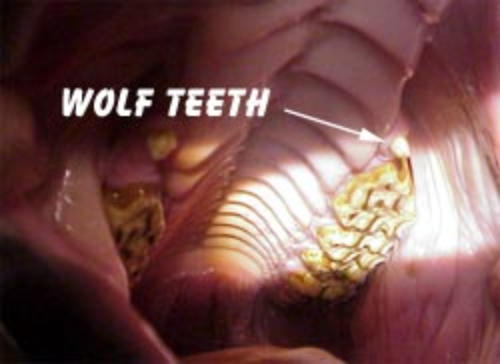














© Copyright © 2002- 2016 All rights reserved This page designed and
maintained by Word Works
Why horses
need
dental
care
The mouth is a performance horse's "steering wheel". A horse with a balanced mouth, free of dental irritation and disease, has "power steering"! Regular dental care removes irritating points and malocclusions, safeguarding your horse's health and overall performance. It's also cost effective - a horse with a healthy mouth needs less feed to get required nutrition. Wouldn't you like your ride to have "power steering"? • Equine Dentition: The Horse’s Teeth • Performance Dentistry/Maintenance • Types of Dental ProblemsEquine Dentition: The Horse's Teeth
Horses have hypsodont teeth. Unlike adult human teeth, that remain the same throughout life, adult equine teeth continue to erupt and wear down until the tooth wears out (20-30 years). A horse's teeth pulverize fodder and crush grain with a side to side chewing action. This lateral motion creates sharp edges (called points) and irregular surfaces on the teeth. Points can be painful and may actually cut the inside of the horse's cheek. (See photo) Before we domesticated horses for our use, they spent 12-16 hours a day grazing on coarse forage. Chewing forage necessitates wider lateral movement than chewing the grain and pellets we feed our horses. As a result, modern feed does not encourage the more regular tooth wear found in wild horses. Uneven biting and chewing surfaces make it difficult for the horse to process feed and get the nutrition it needs for optimum health and performance. Incomplete chewing of feed leads to incomplete digestion and nutrient absorption (and sometimes colic). A painful or unbalanced mouth makes the bit uncomfortable and leads to performance problems and difficulty in riding or driving the horse.Performance Dentistry/Maintenance
Horses need dental care throughout their lives. Regular dental maintenance corrects problems before they jeopardize the horse's health and performance. Dental care schedule: Foals • check early in life for normal dentition • correct problems such as overbite, underbite 2-6 years • horse replaces deciduous (baby) teeth with permanent teeth • up to 24 permanent teeth erupt • check for and remove caps/cap fragments from baby teeth • remove wolf teeth Adults • need yearly dental care to maintain a balanced mouth • some horses may require twice yearly maintenance • monitor and correct wear problems, disease • emergency care (broken teeth, oral abrasions, abscesses, injuries) Geriatric • regular maintenance and balanced dentition add years to a horse's lifeTypes of Dental Problems
Incisors • overlong: prevents molars from making contact to grind food • dorsal curvature (frowning incisors): abnormal wear forms a downward curve in bite • ventral curvature (smiling incisors): abnormal wear forms an upward curve in bite • brachygnathism (parrot mouth): misalignment of upper incisors - the upper incisors overlap in front of the lower incisors when mouth is closed • prognathism (sow mouth): misalignment of upper incisors that puts them behind the lower incisors when mouth closes Molars • overlong (excessive crowns): prevents proper occlusal contact with opposing molar for grinding food • hooks: form when improper contact makes the tooth wear more on one side than another, forming a sharp hook in the enamel. Hooks prevent proper chewing. Long hooks can actually pierce the horse's gum or cheek, leading to infection. • ramps: tooth wears unevenly forming a slant, or ramp. Ramps also interfere with chewing. • steps: caused by overgrowth in a molar table (group of molars) caused by malocclusion (bad contact of chewing surfaces) • waves: a whole row of uneven molars that interferes with normal jaw movement for chewing • excessive transverse ridges: improper alignment leads to uneven wear, forming hard ridges and points Wolf teeth • rudimentary premolars in front of the molars • interfere with the bit and, if impacted, can become inflamed Caps • deciduous or baby teeth that fail to shed • interfere with proper eruption of permanent teeth • interfere with chewing Missing, loose or broken teeth Cavities and necrotic (infected) teeth Root abscesses • can lead to sinusitis and foul smelling nasal discharge
Northeast Texas Veterinary
Dental Center
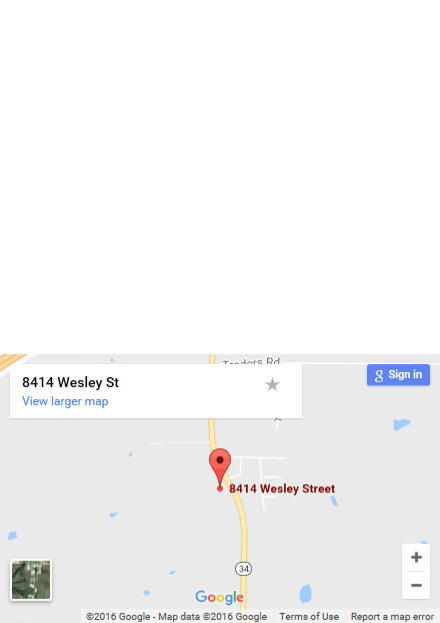
8414 Wesley Street Greenville, TX 75402 903.454-1563 info@crossroadsvetclinic.com Appointments: 9 a.m.– 5 p.m. Monday-Friday Open for animal drop-off at 7:30 a.m.